Best seller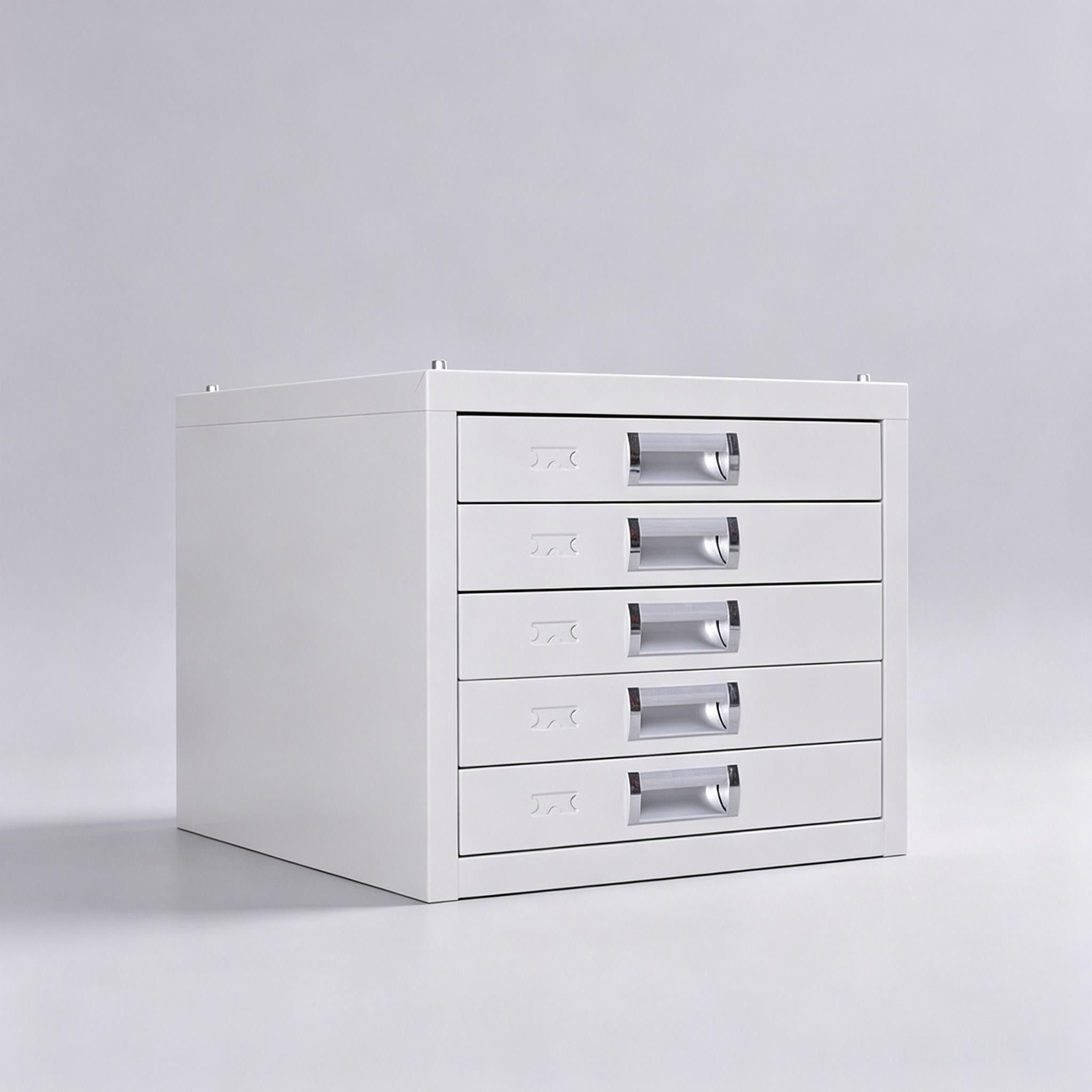
Paraffin block storage
5-Drawer Paraffin Block Storage Cabinet
The standard archive cabinet: four stackable sections, five drawers each, about 16,500 cassettes per set.
16,500 blocks5 per section →
Drawer-based steel cabinets for embedded tissue blocks, from a single 4,950-cassette section to a 19,800-cassette archive wall. Every model uses the same 0.8 mm cold-rolled steel body and auto-return drawer runners.
A paraffin block storage cabinet is the fixed point in a histology workflow. Blocks arrive from embedding, are trimmed and cut, then filed by accession number and kept for as long as the retention rules require. The cabinet has to hold that sequence intact for years while allowing a single block to be pulled without disturbing its neighbours.
We build three drawer patterns: five drawers per section for maximum cassette count, six drawers for a shallower working drawer or a lockable door, and a slim 450 mm cabinet for narrow rooms. All three stack on the same corner pins, so a department can mix patterns along one wall and still treat it as a single system.
Capacity is a function of drawer area and cassette thickness, not of cabinet height. Our standard 515 x 480 mm drawer holds roughly 800 to 825 standard cassettes; the slim 450 mm drawer holds about 600. Multiply by drawers per section and sections per set to get the set capacity.
The table below compares the models in this range. Figures are nominal, measured with standard cassettes at typical fill; thick cassettes, dividers and loose packing all reduce the real number, so allow 5 to 10 percent headroom when sizing an archive.
| Model | Drawers | Capacity | Best for |
|---|---|---|---|
| 5-drawer cabinet | 20 (4 x 5) | 16,000-16,500 blocks | General archive, best capacity per section |
| 6-drawer lockable | 24 (4 x 6) | 19,800 blocks | Controlled access, medico-legal cases |
| 6-drawer cassette | 24 (4 x 6) | 19,800 blocks | Cutting room, cassette boxes |
| 20-drawer FFPE | 20 (4 x 5) | 12,000 blocks | Narrow rooms, single-row filing |
The body is 0.8 mm cold-rolled steel, laser-cut and CNC-formed, then put through a nine-stage pretreatment: degreasing, rinsing, pickling, rinsing and passivation before the powder coat. Skipping stages is what produces cabinets that rust along the cut edges two winters after installation.
The coating is epoxy powder cured at high temperature. It resists alcohol, most laboratory cleaners and repeated wiping. What fails first in practice is not the coating but the drawer runner: a cheap slide loses its detent and the drawer stops closing flush. We use auto-return telescopic slides with a damping pad, and the runner is the part we would replace first if a cabinet is ever refurbished.
An open archive is fine in a locked room. Where the room is shared, specify drawer locks or a full-height lockable door. The door version secures six drawers with one key, which is faster to open and easier to audit than twenty individual locks.
For medico-legal or research material, keyed-alike sections let one key open a whole wall while a different key opens the research bay. Tell us the keying plan at order time; changing it later means replacing cylinders.
A four-section stack is 1,520 mm high, which keeps the top drawer reachable for most staff. If the room is used by shorter technicians or by staff working seated, three sections is a better working height and the fourth can go on an adjacent column.
Blocks are lighter than slides per unit volume, so floor loading is rarely the constraint for block cabinets; the risk is tipping. Restrain stacks over 1.5 m to the wall, and never open two drawers in the same column at once.
The standard archive cabinet: four stackable sections, five drawers each, about 16,500 cassettes per set.
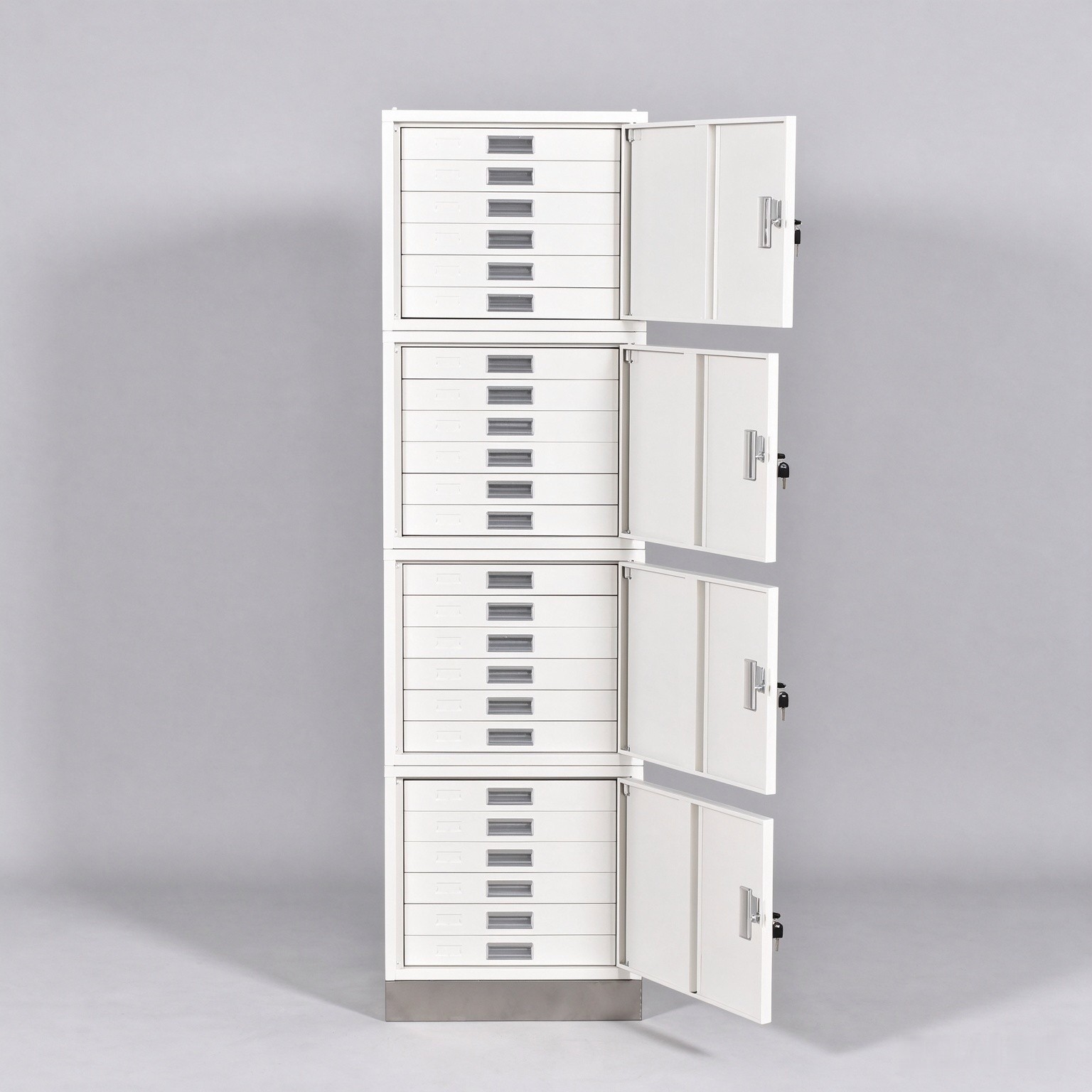
Six drawers behind a lockable hinged door, for departments that need controlled access to archived blocks.
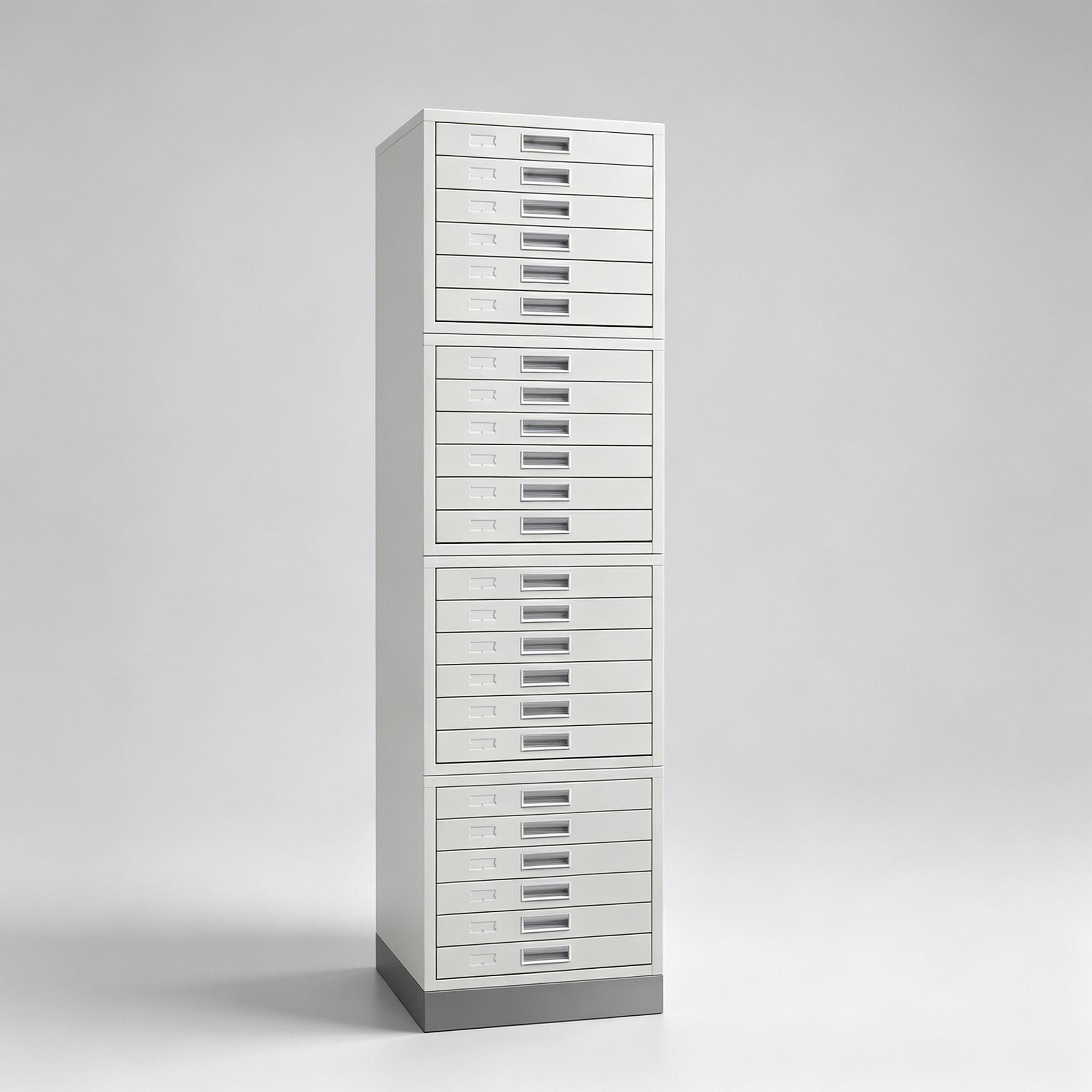
Open-front six-drawer section for cassette boxes and processed blocks, with movable dividers.
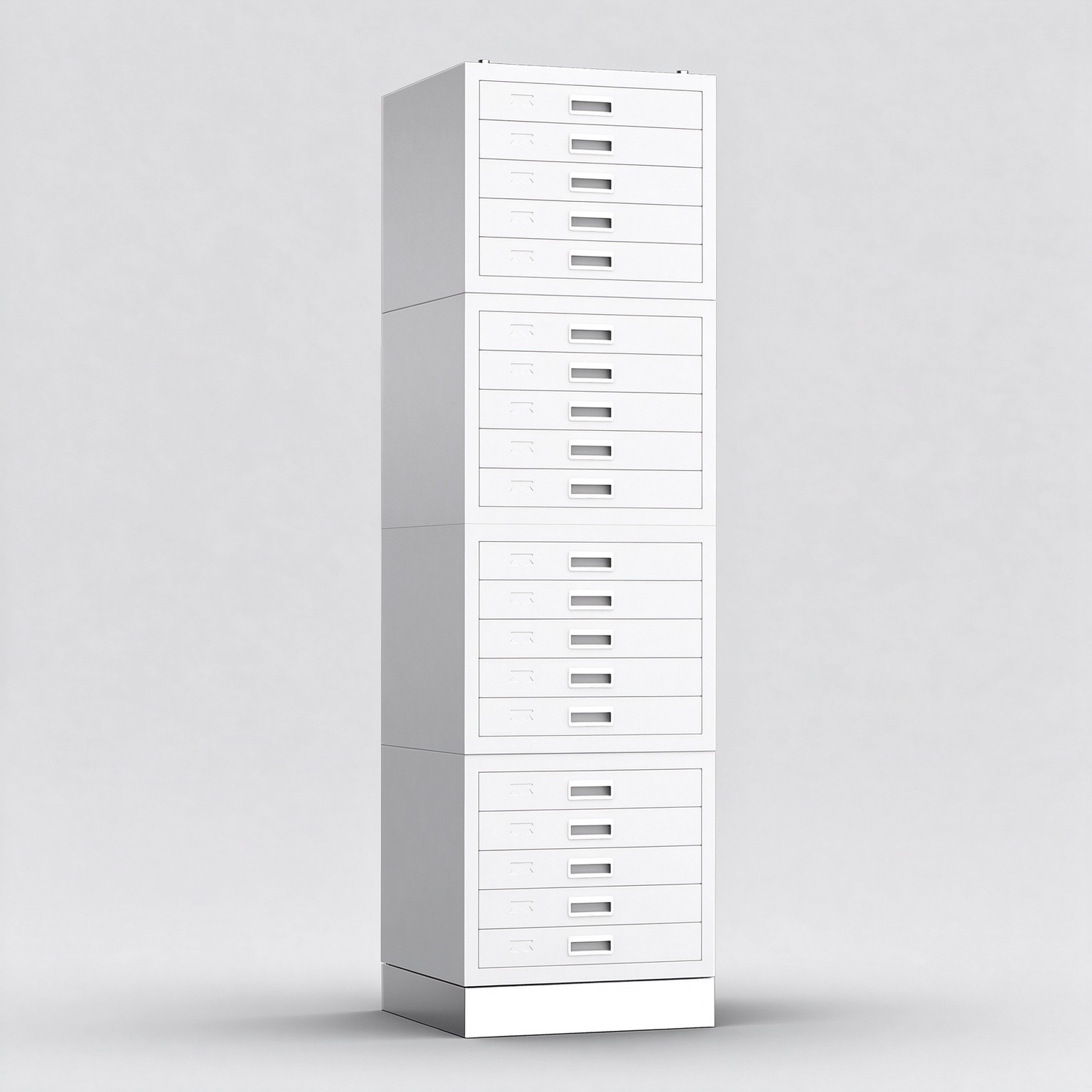
A narrower 450 mm cabinet with twenty drawers and about 12,000 blocks, for corridors and tight archive rooms.
Both hold cassettes. A block cabinet is sized for embedded blocks filed by accession; a cassette cabinet is often used for empty or processed cassettes and cassette boxes, with dividers set for boxes rather than rows.
Sections stack within the same drawer configuration. Mixing patterns along one wall is fine; stacking different patterns is not recommended because the corner pins and load paths differ.
Multiply your annual block count by the retention period, add 15 percent for growth, then divide by the set capacity. A department cutting 300 blocks a day produces about 75,000 blocks a year, or roughly five 16,500-block sets per year of retention.
The cabinets are manufactured to Chinese national standards (GB) for steel furniture, including coating adhesion and drawer cycle testing. Ask us for the current test documentation with your quotation.
Send your block or slide counts, retention period and room plan. We will return a capacity calculation and a quotation within two working days.